
Right-Sizing Silver: An Application-Driven Approach to Engineering Reliability
Discover how silver-free solder alloys balance cost, yield, and reliability in high-volume assembly. Read the full article published by SMT007 here.
 Ebad Rehman
Global Product Manager, Solder Paste
Ebad focuses on surface mount technology materials for high-reliability automotive, communications, and computing applications, with an emphasis on thermomechanical performance and low-temperature assembly solutions. He holds a bachelor’s degree in electrical engineering and a master’s degree in technology management. He has been with MacDermid Alpha for more than five years and has spearheaded multiple product development initiatives.
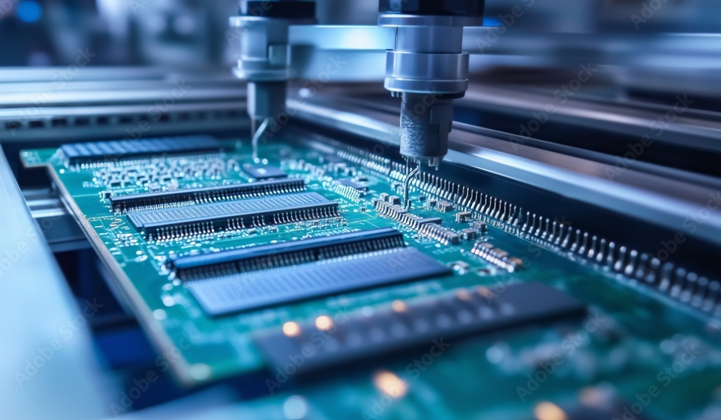
Rising cost pressure and metals market uncertainty are prompting manufacturers to rethink alloy composition to balance total cost of ownership, process yield, and mechanical performance.
Solder alloy selection plays a vital role in electronics assembly, directly influencing cost structure, process stability, and long‑term reliability. As manufacturing scales and product requirements continue to advance, these decisions are increasingly revisited with a more focused objective: aligning materials with how products are built, processed, and used in real‑world conditions.
Silver-containing alloys have long served as a standard in lead-free assembly, supported by established performance and process familiarity. What is changing is how their role is being evaluated, as material selection is increasingly influenced not only by performance benchmarks but also by exposure to raw material volatility and the need to maintain stable, high-yield manufacturing. Within this context, manufacturers are revisiting silver-free solder pastes through a more balanced lens.
Balancing Cost, Yield, and Reliability in High-Volume Assembly
Material cost is often the most visible factor in alloy selection, but it represents only part of the equation. Total cost of ownership (TCO) includes the impact of materials on yield, rework, throughput, and long-term reliability. In high-volume manufacturing, small variations in process performance can translate into meaningful differences in operational cost, directly affecting margin stability and production efficiency.
This is particularly relevant in high-volume markets such as consumer electronics and appliance systems, where competitive pricing, defined product lifecycles, and increasing functionality place sustained pressure on both cost structures and manufacturing performance. In these segments, materials are expected to support consistent yields and throughput while contributing to overall cost targets.
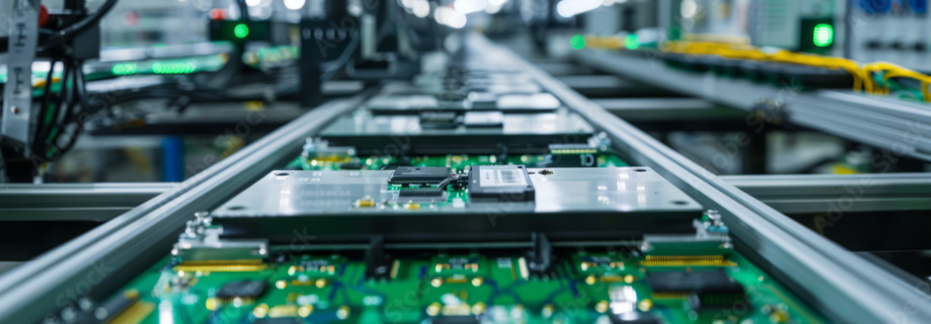
Silver contributes to the thermomechanical performance of traditional solder alloys at higher operating temperatures, while introducing cost sensitivity tied to global market conditions. Reducing reliance on these inputs can improve cost stability and provide greater predictability in material spend, particularly in high-volume environments where fluctuations in input costs can have an outsized impact on overall profitability.
At the same time, engineers must evaluate material changes in the context of process performance, where print consistency, stencil life, and reflow behavior directly influence yield and throughput. Materials that maintain stable performance across these parameters can help reduce variability and support more efficient production.
Mechanical Reliability Under Real-World Conditions
Reliability is best understood in the context of how products are used. In many applications operating below 100°C, mechanical stress becomes a primary driver of long-term performance, as products are routinely exposed to vibration and impact during transport, installation, and use.
These conditions are common in consumer electronics and appliance systems, where products are expected to maintain performance over their operational lifecycles despite repeated handling and operational stress. In high-volume assemblies such as appliance control boards or consumer devices, this repeated strain can make differences in mechanical performance more visible over time.
These conditions have increased the industry’s focus on material behavior under mechanical loading, where resistance to fatigue, crack initiation, and propagation is critical. For assemblies operating below 100°C, thermal demands are typically moderate, shifting the reliability focus away from high-temperature degradation and toward mechanical durability.
In this context, optimizing solder joint performance for vibration and drop resistance becomes a strategic consideration, particularly in applications where product reliability and field performance directly influence brand perception, warranty costs, and lifecycle expectations.
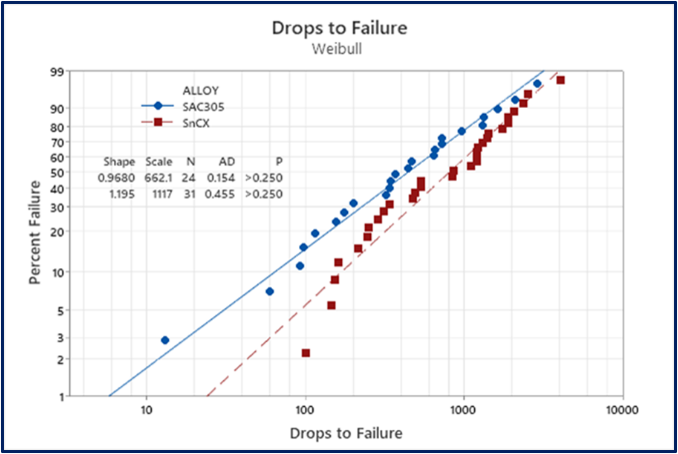
Figure 1: Weibull analysis illustrating improved drop shock and vibration performance relative to SAC-based alloys under defined test conditions.
Rather than relying solely on traditional alloy properties, materials are increasingly evaluated in the context of application-specific performance. This shift has driven renewed interest in alternative alloy designs that can better balance mechanical robustness with process stability.
Rethinking Alloy Design for Modern Assembly Requirements
Silver-free solder alloys are not new, but their design has evolved. Engineers often evaluated earlier generations primarily on cost, while more recent formulations reflect a broader objective that integrates cost efficiency, mechanical reliability, and process consistency.
This aligns with a broader trend in materials engineering, where the goal is not to maximize a single property but to achieve the right balance across multiple performance requirements, particularly in electronics assembly where manufacturing efficiency and in-field performance must both be addressed.
Applying Silver-Free Alloy Design in High-Volume Assembly
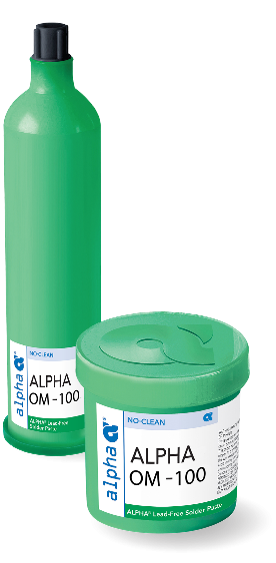
This approach can be seen in materials such as ALPHA® OM-100 SnCX® 07, a no-clean, zero-halogen, silver-free solder paste developed for high-volume electronics assembly.
From a cost perspective, the alloy offers up to 30% metal savings compared with traditional high-silver alloy combinations, helping reduce material spend, and limit exposure to fluctuations in precious metal pricing.
From a reliability standpoint, test data demonstrate up to a 50% improvement in characteristic life and up to a 40% improvement in drop shock and vibration performance compared with SAC305.
At the same time, thermal cycling performance remains comparable to SAC305 alloys for applications operating between -20°C and 100°C, supporting reliability expectations without introducing additional risk.
Process Stability and Manufacturing Consistency
Material performance must translate into consistent results on the manufacturing line. For process engineers, this means predictable behavior during printing and reflow, along with stability over extended production runs.
The material supports a wide print process window, consistent transfer efficiency, and up to 16 hours of stencil life under typical ambient conditions, with compatibility across both air and nitrogen reflow environments.
In high-volume manufacturing environments, where throughput, uptime, and yield consistency are closely tied to operational efficiency, these characteristics enable manufacturers to capture cost and processing benefits without introducing additional complexity or variability.
Reframing Material Selection in Electronics Assembly
Material selection in electronics assembly continues to evolve as design, process, and procurement teams reassess priorities. There is an increasing focus on real-world performance, alongside strategies that enhance cost stability and improve resilience to market variability.
Silver-free solder pastes sit at this intersection, offering a path to reduce reliance on precious metals while maintaining process stability and mechanical performance.
Below 100°C, Silver‑Free Solder Alloys Offer the Best Balance of Cost and Performance
For assemblies operating below 100°C, particularly in high-volume consumer and appliance applications, silver-free solder materials provide a practical way to align cost, reliability, and manufacturability with current product requirements, production demands, and competitive market pressures.